Tuesday, 12 September 2017

Music video camera angles

1 . Extreme long shot 

Camera angle: Extreme Long Shot

This can be taken from as much as a quarter of a mile away, and is generally used as a scene-setting, establishing shot. eg the outside of a building, or a landscape, and is often used to show scenes of action, in a war film or disaster movie. There will be very little detail visible in the shot, it's meant to give a general impression rather than specific information.

Camera angle: Long shot

2. Long Shot

Which shows the image as life size to the real distance between the audience and the screen in a cinema. With the head near the top of the frame and the feet near the bottom. While the focus is on characters, plenty of background detail still emerges, can tell the coffins on the right are in a Western-style setting.
Camera angle:  Medium shot

3. Medium Shot

Contains a figure from the knees/waist up and is normally used for dialogue scenes, or to show some detail of action. Variations on this include the two shot and the three shot. Any more than three figures and the shot  becomes a long shot. Background detail is minimal, probably because location has been established earlier in the scene the audience already know where they are and now want to focus on dialogue and character iteration. 
Camera angle: close up

4. Close-Up

This shows very little background, and concentrates on either a face, or a specific detail of (mise en scene). Everything else is just a blur in the background. This shot magnifies the object  and shows the importance of things, be it words written on paper, or the expression on someone's face. The close-up takes you into the mind of a character. Only let people that we really trust get THAT close to our face - mothers, children and lovers, usually - so a close up of a face is a very intimate shot. A film-maker may use this to make us feel extra comfortable or extremely uncomfortable about a character, and usually uses a zoom lens in order to get the required framing.
Camera angle:  Extreme Close Up
Extreme Close Up

5. Extreme Close-Up

As its name suggests, an extreme version of the close up, generally magnifying beyond what the human eye would experience in reality. An extreme close-up of a face, for instance, would show only the mouth or eyes, with no background detail whatsoever. This is a very artificial shot, and can be used for dramatic effect. The tight focus required means that extra care must be taken when setting up and lighting the shot - the slightest camera shake or error in focal length is very noticeable.

Camera Angles

The relationship between the camera and the object being photographed (ie the ANGLE) gives emotional information to an audience, and guides their judgment about the character or object in shot. The more extreme the angle (ie the further away it is from eye left), the more symbolic and heavily-loaded the shot. 

1. The Bird's-Eye view

This shows a scene from directly overhead, a very unnatural and strange angle. Familiar objects viewed from this angle might seem totally unrecognisable at first (umbrellas in a crowd, dancers' legs). This shot does, however, put the audience in a godlike position, looking down on the action. People can be made to look insignificant, ant-like, part of a wider scheme of things. Hitchcock (and his admirers, like Brian de Palma) is fond of this style of shot. 
Camera angle: high angle shot
A cameraman, raised above the action, gets a high angle shot

2. High Angle

Not so extreme as a bird's eye view. The camera is elevated above the action using a crane to give a general overview. High angles make the object photographed seem smaller, and less significant (or scary). The object or character often gets swallowed up by their setting - they become part of a wider picture. 

3. Eye Level

A fairly neutral shot; the camera is positioned as though it is a human actually observing a scene, so that eg actors' heads are on a level with the focus. The camera will be placed approximately five to six feet from the ground. 

4. Low Angle 

These increase height (useful for short actors like Tom Cruise or James McAvoy) and give a sense of speeded motion. Low angles help give a sense of confusion to a viewer, of powerlessness within the action of a scene. The background of a low angle shot will tend to be just sky or ceiling, the lack of detail about the setting adding to the disorientation of the viewer. The added height of the object may make it inspire fear and insecurity in the viewer, who is psychologically dominated by the figure on the screen. 

5. Oblique/Canted Angle

Sometimes the camera is tilted (ie is not placed horizontal to floor level), to suggest imbalance, transition and instability (very popular in horror movies). This technique is used to suggest POINT-OF-View shots (ie when the camera becomes the 'eyes' of one particular character,seeing what they see — a hand held camera is often used for this. 

Camera Movement

A director may choose to move action along by telling the story as a series of cuts, going from one shot to another, or they may decide to move the camera with the action. Moving the camera often takes a great deal of time, and makes the action seem slower, as it takes several second for a moving camera shot to be effective, when the same information may be placed on screen in a series of fast cuts. Not only must the style of movement be chosen, but the method of actually moving the camera must be selected too. There are seven basic methods: 

1. Pans

A movement which scans a scene horizontally. The camera is placed on a tripod, which operates as a stationary axis point as the camera is turned, often to follow a moving object which is kept in the middle of the frame. 

2. Tilts

A movement which scans a scene vertically, otherwise similar to a pan. 

3. Dolly Shots

Sometimes called TRUCKING or TRACKING shots. The camera is placed on a moving vehicle and moves alongside the action, generally following a moving figure or object. Complicated dolly shots will involve a track being laid on set for the camera to follow, hence the name. The camera might be mounted on a car, a plane, or even a shopping trolley (good method for independent film-makers looking to save a few dollars). A dolly shot may be a good way of portraying movement, the journey of a character for instance, or for moving from a long shot to a close-up, gradually focusing the audience on a particular object or character. 

4. Hand-held shots

The hand-held movie camera first saw widespread use during World War II, when news reporters took their windup Arriflexes and Eyemos into the heat of battle, producing some of the most arresting footage of the twentieth century. After the war, it took a while for commercially produced movies to catch up, and documentary makers led the way, demanding the production of smaller, lighter cameras that could be moved in and out of a scene with speed, producing a "fly-on-the-wall" effect.This aesthetic took a while to catch on with mainstream Hollywood, as it gives a jerky, ragged effect, totally at odds with the organised smoothness of a dolly shot. The Steadicam (a heavy contraption which is attached a camera to an operator by a harness. The camera is stabilized so it moves independently) was debuted in Marathon Man (1976), bringing a new smoothness to hand held camera movement and has been used to great effect in movies and TV shows ever since. No "walk and talk" sequence would be complete without one. Hand held cameras denote a certain kind of gritty realism, and they can make the audience feel as though they are part of a scene, rather than viewing it from a detached, frozen position.
Camera angle:  Crane shot
A crane in use, following the path of a balloon floating into the sky

5. Crane Shots

Basically, dolly-shots-in-the-air. A crane (or jib), is a large, heavy piece of equipment, but is a useful way of moving a camera - it can move up, down, left, right, swooping in on action or moving diagonally out of it. The camera operator and camera are counter-balanced by a heavy weight, and trust their safety to a skilled crane/jib operator.

6. Zoom Lenses

A zoom lens contains a mechanism that changes the magnification of an image. On a still camera, this means that the photographer can get a 'close up' shot while still being some distance from the subject. A video zoom lens can change the position of the audience, either very quickly (a smash zoom) or slowly, without moving the camera an inch, thus saving a lot of time and trouble. The drawbacks to zoom use include the fact that while a dolly shot involves a steady movement similar to the focusing change in the human eye, the zoom lens tends to be jerky (unless used very slowly) and to distort an image, making objects appear closer together than they really are. Zoom lenses are also drastically over-used by many directors (including those holding palmcorders), who try to give the impression of movement and excitement in a scene where it does not exist. Use with caution - and a tripod!

7. The Aerial Shot

An exciting variation of a crane shot, usually taken from a helicopter. This is often used at the beginning of a film, in order to establish setting and movement. A helicopter is like a particularly flexible sort of crane - it can go anywhere, keep up with anything, move in and out of a scene, and convey real drama and exhilaration — so long as you don't need to get too close to your actors or use location sound with the shots.

Friday, 8 September 2017

Styles of Music videos

Image result for animation style music videosStyles of music videos


Animation.
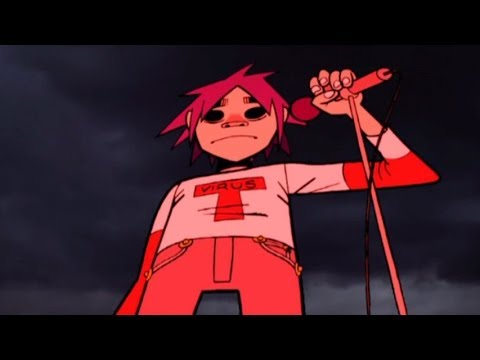
Animated music videos have an animated film, or cartoons, with the soundtrack playing in the background. 
These videos usually don't have anything real to show to the viewers, even though the song is produced by the original artist.
The animations in the videos are designed by using different software and these music videos are usually cheap as they are entirely digital.


Image result for interpretive style music videos
Interpretive.
Interpretive music videos can be interpreted by the audience in many ways. 
Each person can see the video in different ways and understand a different meaning according to their mentality.


Impressionists.
An impressionist music video can be used to show a particular theme to the audience.
It includes random and peculiar shots and images to express the theme of the video.
Abstract features are mostly used in an impressionist music video.Image result for impressionist style music videos
Image result for intertextuality style music videos

Intertextuality.
References used from some other media product, some mythology, history, or any other type of music video.


Surrealist.
Simliar to impressionists music videos, surrealist music videos are very abstract and may not have a relation with the music itself.
A surreal music video contains artificial, unreal or superstitious elements in it.
A surreal music video gives a very different dream like effect to the audience.Image result for surrealist style music videos

Allusion.
It is similar to intertextuality to some extent.
An allusion music video gives reference of another thing sometimes directly and sometimes indirectly.
It depends on how the audience see the video, and how they make a connection between the video and others similar to ones they have seen before.
Image result for allusion style music videos


Types of music videos


Types of music videos
Performance based.
Narrative Based.
Concept based.


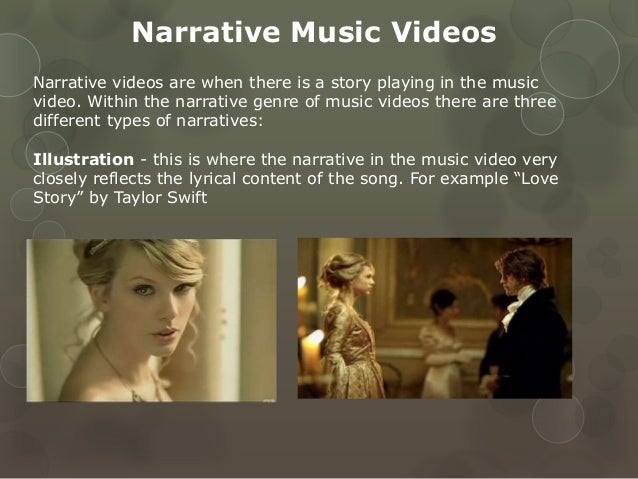
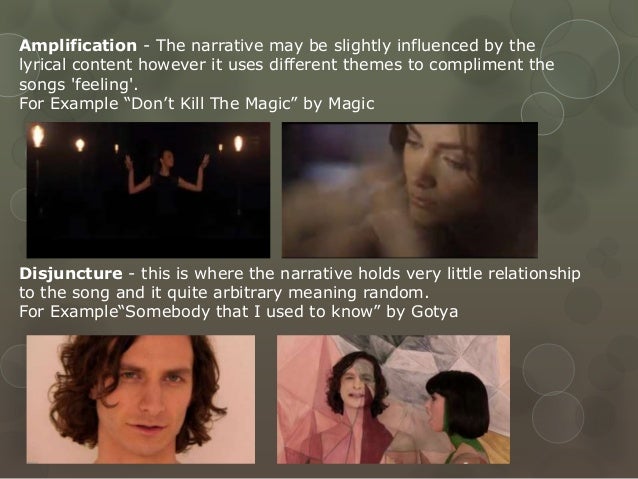
Narrative Based music videos,
Narrative videos try and tell a story which include the lyrics or in the video the lyrics have been dramatised.
Narrative videos are often found when they feature footage of a film.
They also often establish a clear relationship between the lyrics and the visuals of the song.
Either actors are acting according to the story of the music artists are performing. Narrative based music videos might include performance of the actors of the musicians, but they focus mainly on the narrative.
Narrative based music videos require the viewers to understand the lyrics of the song clearly and these types of music videos are easily understood and enjoyed by the audience.
Image result for narrative music videos


Image result for narrative music videos


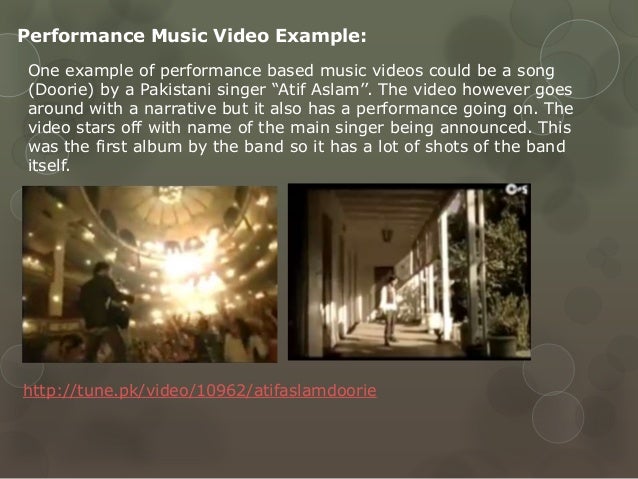
Performance based music videos


Performance based music videos are only, or mainly the artist or band performing their song.
These include dancing, lip syncing, live concerts or musicians playing music instruments.
Performance based music videos mostly build relationships with the audience to show off their star identity.
These videos don't have any specific message for the audience or there is no concept or idea behind the song or video.
There is no connection between the lyrics of the song, as you would be able to see well dressed artists performing on their song.
These types of videos mostly include close up shots or the artist and the artist making direct contact with the viewers.
Performance based music videos are the most common of the three.
Image result for performance music videos
Imagine Dragons
Image result for performance music videos


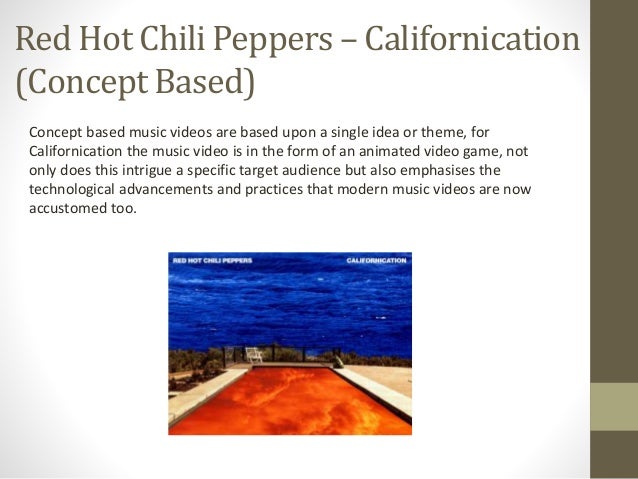
Concept based music videos


Concept based music videos are based on a specific concept or a theme.
The concept can be magic, supernatural, historical, religious, scientific or any other idea which is based on a concept or a theme.
Mostly concept based music videos intrigue a specific class or target audience, according to the idea of the music video.
These videos are not easy to understand as the other two types are and they are more difficult to produce.
Concept based music videos can be very interesting if the content id fully understood by the viewers.
The unusual content of the video is what attracts most of the people.
Image result for concept music videosRelated image

Thursday, 22 June 2017

Andrew Goodwin's music video - "dancing in the distraction factory"

In 1922, Andrew Goodwin published a book called  "dancing in the distraction factory", after years of research into music videos,
In this book he came up with a number of codes and conventions for music videos a range of elements that many must videos have in common.

Andrew Goodwin stated that there were six things that needed to be in music videos.

Genre, conventions/Iconography
Visual match up with lyrics
Visual match up with music
Stay representation
Voyeurism
Intertextuality

Visual match lyrics
The visuals within a music video should compliment the lyrics of the song to emphasise the reasoning behind the songs creation of visuals matching lyrics is 'Eminem - when I'm gone' which portrays a music vide that relates to the lyrics of the song showing a fast paced montage within the video. This music video portrays the artist re-enacting his life moments involving negative moments about him and his family.


Visual match music
Andrew Goodwin believes that the visuals and illustration in a music promo, should potentially comply with the rhythm and beat of the music. Therefore, with every synchronised or in time beat, there may be a transitional shot taking place or a change in visualisation, an example of this is Kendrick Lamar - Alright, which tends to use transitional shots or visual effects in time with the beat.


Star Representation
Andrew Goodwin refers to star representation as a crucial aspect within music videos, they make the promo more appealing to audiences around the world due to the power of the musical artists, whilst bringing a unique and stand out style to the music video. Star Representation may occur through the uses of costume, movements and appearance. Star Representation can lead to profit not only in the promo but for all the artist public appearance and image, which will promote sales and popularity, an artist which has a strong star representation is Rhianna. 

Voyeurism
Voyeurism is interpreted as watching people in the video or them watching someone do something watching attractive men and woman. The artist may also look dead on at the camera or direct address to the audience breaking the 4th wall a Brechtian technique. An example of Voyeurism in some shots is in 'Big Sean - Blessings" music video.


Intertextuality, parody and pastiche
The last technique stated by Andrew Goodwin to create a successful music video is a convention of music promos which is intertextually, parody and pastiche, making light reference or paying homage to another music video. It may include references to films and televisions programmes which is intertextuality. An example parody and pastiche is 'Alien ant farm - Smooth criminal. 

History of Music videos

History of Music Videos

An early example of a music video, St Louis Blue's - Bessie Smith 1929.
Blue singer Bessie Smith appeared in a two-reel short film called, 'Saint Louis BLUES' featuring a dramatized performance of the hit song.
It was also shown in features until 1932.

Music videos are often called promotion videos or simply promos, due to the fact that they are usually promotional devices. Sometimes, music videos are termed short-form music videos to distinguish them from full length movies pertaining to music.
In the 1980s, the term 'rock video' was often used to describe this form of entertainment although the term has fallen into disuse.

In 1940, Walt Disney released Fantasia an animated film based around famous pieces of classical music.

The earliest music video were filmed in the mid 1950s, however, before then, as early as the 1920s, films by animators such as Oskar Fischinger were accompanied by musical scores labels 'visual music'.

The early animated efforts of Walt disney, were built around music, the warner brothers cartoons, even today billed as Merrie Melodies, were initially fashioned around specific shorts, featuring such popular performances as Cab Calloway, were also distributed to theatres.

1950's and 60's development
In 1956 Tony Bennett was filmed walking along The Serpentine in Hyde Park, London as his recording of 'Stranger in Paradise' played, this film was distributed to and played by the UK and US television stations, leading Bennett to later claim he made the first music video.

According to the internet accuracy project, disk jockey-singer J.P. 'The Big Bopper' Richardson was the first to coin the phrase 'rock video'.

Around 1960 the Scopitone, a visual jukebox, was invented in France and short films were produced by many French artists, such as Serge Gainsbourg, Francoise  Hardy and Jacques Dutronc to accompany their songs. Its spreads to other countries and similar machines such as the Cinebox in Italy and Colour-sonic in the USA were patented.

The defining work in the development of the modern music video was The Beatles first major motion picture. A Hard Day's Night in 1964, directed by Richard Lester,. The musical segments in this film arguably set out the basic visual vocabulary of todays music videos, influencing a vast number of contemporary musicians, and countries subsequent pop and rock group music videos.

The Beatles took the genre to new heights with their groundbreaking films for 'strawberries Fields Forever' and 'Penny Lane' made in early 1967 which used techniques borrowed from underground and avant grade film, such as reversed film effects, dramatic lighting, unusual camera angles and rhythmic editing.  Created at the height of the psychedelic music period, these two landmark films are among the very first purpose, made concept video attempts to illustrate the song in an artful manner, rather than just creating a film of an idealised performance.

In 1966 the clip of Bob Dylan performing Subterranean Homesick Blues filmed by D A Pennebakbr was much used. The clip ironically portrayals of a performance and the seemingly random inclusion of a celebrity in a non performing role also became mainstays of the form.

Modern Era
The key innovation in the development of the modern music video was, of course, video recording and editing processes, along with the development of a number of related effects such as chroma-key. The advent of high quality colour videotape recorders and portable video cameras coincided with the DIY ethos of the New Wave era and this enabled many pop acts to produce promotional videos quickly and cheaply, in comparison to the relatively high costs of film. However, as the genre development music video directors increasingly turned to 35mm film as the preferred medium, while others mixed film and video.
By the mid-1980s releasing a music video to accompany a new single had become standard, and acts like The Jacksons sought to gain a commercial edge by creating lavish music videos with million dollar budgets.

In the UK the importance of Top of the Pops to promote a single created an environment of innovation and competition amongst bands and record labels as the shows producers placed limits on the number of videos it would use, therefore a god video would increase a songs sales as viewers hoped to see the video gain the following week.

The early self produced music by Devo, including the pioneering completion, The Truth About Devolution' directed by Chuck Statler, were also developments in the evolution of the genre and these Devo video cassette releases were arguably among the first true long form video productions. 

1980s
1981 MTV is launched, the first video to be aired is Buggles 'Video killed the Radio Star'

David Bowie scored his first UK number one in nearly a decade thanks to director David Mallets' eye catching promo for 'Ashes to Ashes'.

In the early to mid 1980s, artists started to use more sophisticated effects in their videos, and added a storyline or ploy to the music video. Michael Jackson was the first artist to beginning, middle and end. He did this in a small way with Billie Jean, directed by Steve Barron, then in a west side story was with director Bob Gerald's Beat it, but it wasn't until the 1984 release of the Thriller short film that he took the music video format to another level.

MTV
Music video would, by the mid-1980s, grow to play a central role in popular music marketing.

Madonna, owed a great deal of her success to the skilful construction and seductive appeal of her videos. Some academics have compared music video to silent films, and it is suggested that stars like Madonna have constructed an image that in many ways echoes the image of the great stars of the silent era such as Greta Garbo. Although many see MTV as the start of a 'golden era' of music videos and the unparalleled success of a new art form in popular culture, others see it as hastening the death of the true musical artist, because physical appeal is now critical to popularity to an unprecedented degree.

Music Video today
In the information technology era, ,music videos now approach the popularity of the songs themselves, being sold in collections of video tape and DVD. Enthusiasts of music videos sometimes watch them muted purely for their aesthetic value. Instead of watching the video for the music the videos are appreciated for their visual qualities, while viewers remain uninterested in the audio portion of the performance. This is a normal sociological reaction some say, to the increasing trend in the music business to focus on the visual appeal of artists, rather than the quality of the music. Critics say that the corporate music managers, over the course of logical and calculated business decisions, have sought to capitalise on the sex appeal of females in music videos rather than in choosing less profitable musicianship-based music.
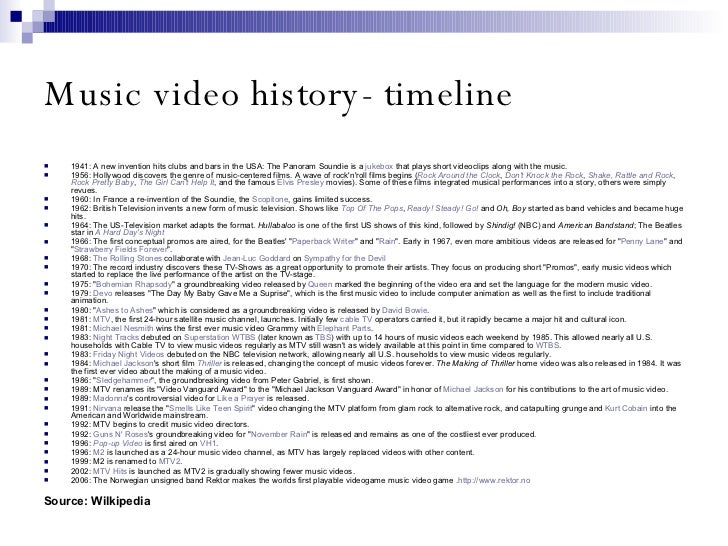
Image result for music video timeline
old


new