Friday, 15 September 2017

Target Audience

Demographics.

Image result for music video
A demographic is a set of objective characteristics that describe a group of people. People who are willing to listen to or watch your music video. Those characteristics include things like age, gender, class, ethnicity, sexuality, location, and sometimes education and lifestyle. The most important characteristics is age.


Image result for music videoPsychographics.

Psychographics segmentation divides the market into groups based on social class, lifestyle and personality characteristics. One example of a life style classification model, is that developed by the advertising agency, Young and Rubican.


Young and Rubican,
The explorer, driven by a need for discovery and a challenge.

The aspirer, materialistic/care more about what others think.

Related imageThe succeeder, self confidence, strong goal orientation and organised.

The reformer, values their own independence judgement and materialistic.

The mainstream, largest group, core need is security, live in a daily routine.

The struggler, seek escape, live for today, few plans tomorrow.

The resigned, aim to survive, predominantly of all areas.

All about music

After relocating to the UK in the mid-1970s, Mulcahy made successful music videos for several noted British pop acts his early UK credits included XTC's "Making Plans for Nigel" 1979 and his landmark video for The Buggles' "Video Killed the Radio Star" 1979, which became the first music video played on MTV in 1981


1926–1959: Talkies, soundies, and shorts


1926 was when 'talkies' were introduced and many musical short films were produced. Vita-phone shorts featured many bands, vocalists and dancers. Early 30s cartoons featured popular musicians performing their hit songs on camera in live action segments during the cartoon.
Musical films were another important precursor to music video, ands several well known music videos have imitated the style of classic Hollywood musicals from the 1930s to the 1950s. A good example is Madonna's 1985 video for 'Material Girl' which was closely modelled on Jack Coles staging of 'Diamonds are a girls best friend'. 


1960–1973: Promotional clips and others


In 1964, The Moody Blues producer, Alex Murray, wanted to promote his version of 'Go Now'. The short film clip he produced and directed to promote the single has a striking visual style that predates Queens similar 'Bohemian Rhapsody' video by a full decade. 

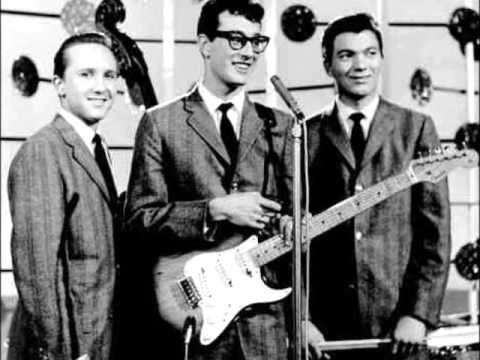
Image result for music video 1950It was the direct model for the successful US TV series The Monkees, from 1966 to 68 which similarly consisted of film segments that were created to accompany variousMonkees songs. The Beatles' second feature, 'Help!' in 1965, filmed in colour in London and on international locations. The title track sequence, filmed in black-and-white, is arguably one of the prime archetypes of the modern performance-style music video, employing rhythmic cross-cutting, contrasting long shots and close-ups, and unusual shots and camera angles, such as the shot 50 seconds into the song, in which George Harrison's left hand and the neck of his guitar are seen in sharp focus in the foreground while the completely out-of-focus figure of John Lennon sings in the background.


During late 1972–73 David Bowie featured in a series of promotional films directed by pop photographer Mick Rock, who worked extensively with Bowie in this period. Rock directed and edited four clips to promote four consecutive David Bowie singles"John, I'm Only Dancing" (May 1972), "The Jean Genie" Nov. 1972, the December 1972 US re-release of "Space Oddity" and the 1973 release of the single "Life on Mars?". The clip for "John, I'm Only Dancing" was made with a budget of just US$200 and filmed at the afternoon rehearsal for Bowie's Rainbow Theatre concert on August 19, 1972. It shows Bowie and band miming to the record intercut with footage of Bowie's dancers The Astronettes dancing on stage and behind a back-lit screen. 


Country music also picked up on the trend of promotional clips to go along with songs. Sam Lovullo, the producer of the television series Hee Haw, said his show presented "what were, in reality, the first musical videos,"while JMI Records made the same claim with Don Williams' 1973 song "The Shelter of Your Eyes." Country music historian Bob Millard wrote that JMI had pioneered the country music video concept by "producing a 3-minute film" to go along with Williams' song. Lovullo said his videos were conceptualized by having the show's staff go to nearby rural areas and film animals and farmers, before editing the footage to fit the storyline of a particular song. 

1974–1980: Beginnings of music television


Image result for music video 1970The Australian tv show 'Countdown' and 'Sounds' both of which premiered in 1974, were significant in developing and popularising the music video genre in Australia and other countries, and in establishing the importance of music video clips as a means of promoting both emerging acts and new releases by established acts. In early 1974, former radio DJ Graham Webb launched a weekly teen-oriented TV music show which screened on Sydney's ATN-7 on Saturday mornings; this was renamed Sounds Unlimited in 1975 and later shortened simply to SoundsAfter relocating to the UK in the mid-1970s, Mulcahy made successful music videos for several noted British pop acts—his early UK credits included XTC's "Making Plans for Nigel" (1979) and his landmark video for The Buggles' "Video Killed the Radio Star" 1979, which became the first music video played on MTV in1981.


In 1975, the British rock band Queen employed Bruce Gowers to make a promotional video to show their new single "Bohemian Rhapsody" on the BBC music series Top of the Pops. According to rock historian Paul Fowles, the song is "widely credited as the first global hit single for which an accompanying video was central to the marketing strategy". Rolling Stone has said of "Bohemian Rhapsody": "Its influence cannot be overstated, practically inventing the music video seven years before MTV went on the air."

In 1980, the music video to David Bowie's "Ashes to Ashes" became the most expensive ever made, having a production cost of $582,000 ($1,671,487 in 2016), the first music video to have a production cost of over $500,000. The video was made in solarisedcolor with stark black-and-white scenes and was filmed in multiple locations, including a padded room and a rocky shore. The video became one of the most iconic ever made at the time, and its complex nature is seen as significant in the evolution of the music video.


1981–1991: Music videos go mainstream

In 1981, MTV launched, "video killed the radio star" and beginning an era of 24hrs a day of music on television. Due to this by the mid 1980s, grow to play a central role in popular music marketing. 
Image result for music video 1990
In the early 1980s, music videos also began to explore political and social themes. Examples include the music video for David Bowies "china girl" and "lets dance" in 1983 which both explores race issues. In 1983, a 14 minute long video for Michael Jackson's song "thriller" directed by John Landis. Costing US$800,000 to film. Another important development in music videos was the launch of The Chart Show on the UK's Channel 4 in 1986. This was a programme which consisted entirely of music videos. This show then moved to ITV in 1989.


1992–2004: Rise of the directors

Two of the music videos directed by Romance in 1995 are notable for being two of the three most expensive music videos of all time, Michael and Janet Jackson's "scream", which allegedly cost $7 million to produce, and Madonna's "Bedtime Story" which costed $5 million. During this time period, MTV launched channels around the world to show music videos produced in each local market. MTV Latin America in 1993, MTV India in 1996, and MTV Mandarin in 1997, among others. 


2005–present: The Internet becomes video-friendly

2005 saw the launch of the website YouTube, which made the viewing of online video much faster and easier, Google Videos, Facebook and myspace's video functionality use similar technology. Such websites had such a big impact on the viewing of music videos, some artists began to see success as a result of videos seen mostly or entirely online. 

The 2008, video for Weezer's "Pork and Beans" also captured this trend, by including at least 20 YouTube celebrities. 
Image result for music video 2017

In 2009 Thirty Seconds to Mars' music video "Kings and Queens" was uploaded to YouTube on the same day of its release, where it has got over one hundred million views. It also received over forty million plays on MySpace. "Kings and Queens" was featured as iTunes Store video of the week and was one of the most downloaded videos ever to be featured. MTV officially dropped the Music Television tagline on February 8, 2010 from their logo in response to their increased commitment to non-scripted reality programming and other youth-oriented entertainment rising in prominence on their live broadcast. Vevo is a music video website launched by several major music publishers in December 2009. The videos on VEVO are syndicated to YouTube, with Google and VEVO sharing the advertising revenue

Wednesday, 13 September 2017

Related music videos

These are music videos which are related in some way to my chosen music video, they have links in the way I wish to film my music video or the way the music video is shown, which has similar ideas to how mine hopefully will be. Seeing as my music video ideas are widely spread the related music videos may not have much relation to each other but only to the music video of my choice in some way or another, could be a very small amount.


Bastille - 'send them off'

Image result for bastille send them off

This song is related to my chosen music video as both start off with an older mans voice introducing the song, as well as it being a high tempo song, as well as drifting in and out of chill to faster passed singing from the lead singer.

The instruments used are swell very similar with both having big instruments such as trumpets which give a good backing sound during the song.

Mendelssohn - 'songs without words'

Image result for songs without words


This song is also related to my music video due to them both having little amounts of words, or none at all


Tuesday, 12 September 2017

Music video camera angles

1 . Extreme long shot 

Camera angle: Extreme Long Shot

This can be taken from as much as a quarter of a mile away, and is generally used as a scene-setting, establishing shot. eg the outside of a building, or a landscape, and is often used to show scenes of action, in a war film or disaster movie. There will be very little detail visible in the shot, it's meant to give a general impression rather than specific information.

Camera angle: Long shot

2. Long Shot

Which shows the image as life size to the real distance between the audience and the screen in a cinema. With the head near the top of the frame and the feet near the bottom. While the focus is on characters, plenty of background detail still emerges, can tell the coffins on the right are in a Western-style setting.
Camera angle:  Medium shot

3. Medium Shot

Contains a figure from the knees/waist up and is normally used for dialogue scenes, or to show some detail of action. Variations on this include the two shot and the three shot. Any more than three figures and the shot  becomes a long shot. Background detail is minimal, probably because location has been established earlier in the scene the audience already know where they are and now want to focus on dialogue and character iteration. 
Camera angle: close up

4. Close-Up

This shows very little background, and concentrates on either a face, or a specific detail of (mise en scene). Everything else is just a blur in the background. This shot magnifies the object  and shows the importance of things, be it words written on paper, or the expression on someone's face. The close-up takes you into the mind of a character. Only let people that we really trust get THAT close to our face - mothers, children and lovers, usually - so a close up of a face is a very intimate shot. A film-maker may use this to make us feel extra comfortable or extremely uncomfortable about a character, and usually uses a zoom lens in order to get the required framing.
Camera angle:  Extreme Close Up
Extreme Close Up

5. Extreme Close-Up

As its name suggests, an extreme version of the close up, generally magnifying beyond what the human eye would experience in reality. An extreme close-up of a face, for instance, would show only the mouth or eyes, with no background detail whatsoever. This is a very artificial shot, and can be used for dramatic effect. The tight focus required means that extra care must be taken when setting up and lighting the shot - the slightest camera shake or error in focal length is very noticeable.

Camera Angles

The relationship between the camera and the object being photographed (ie the ANGLE) gives emotional information to an audience, and guides their judgment about the character or object in shot. The more extreme the angle (ie the further away it is from eye left), the more symbolic and heavily-loaded the shot. 

1. The Bird's-Eye view

This shows a scene from directly overhead, a very unnatural and strange angle. Familiar objects viewed from this angle might seem totally unrecognisable at first (umbrellas in a crowd, dancers' legs). This shot does, however, put the audience in a godlike position, looking down on the action. People can be made to look insignificant, ant-like, part of a wider scheme of things. Hitchcock (and his admirers, like Brian de Palma) is fond of this style of shot. 
Camera angle: high angle shot
A cameraman, raised above the action, gets a high angle shot

2. High Angle

Not so extreme as a bird's eye view. The camera is elevated above the action using a crane to give a general overview. High angles make the object photographed seem smaller, and less significant (or scary). The object or character often gets swallowed up by their setting - they become part of a wider picture. 

3. Eye Level

A fairly neutral shot; the camera is positioned as though it is a human actually observing a scene, so that eg actors' heads are on a level with the focus. The camera will be placed approximately five to six feet from the ground. 

4. Low Angle 

These increase height (useful for short actors like Tom Cruise or James McAvoy) and give a sense of speeded motion. Low angles help give a sense of confusion to a viewer, of powerlessness within the action of a scene. The background of a low angle shot will tend to be just sky or ceiling, the lack of detail about the setting adding to the disorientation of the viewer. The added height of the object may make it inspire fear and insecurity in the viewer, who is psychologically dominated by the figure on the screen. 

5. Oblique/Canted Angle

Sometimes the camera is tilted (ie is not placed horizontal to floor level), to suggest imbalance, transition and instability (very popular in horror movies). This technique is used to suggest POINT-OF-View shots (ie when the camera becomes the 'eyes' of one particular character,seeing what they see — a hand held camera is often used for this. 

Camera Movement

A director may choose to move action along by telling the story as a series of cuts, going from one shot to another, or they may decide to move the camera with the action. Moving the camera often takes a great deal of time, and makes the action seem slower, as it takes several second for a moving camera shot to be effective, when the same information may be placed on screen in a series of fast cuts. Not only must the style of movement be chosen, but the method of actually moving the camera must be selected too. There are seven basic methods: 

1. Pans

A movement which scans a scene horizontally. The camera is placed on a tripod, which operates as a stationary axis point as the camera is turned, often to follow a moving object which is kept in the middle of the frame. 

2. Tilts

A movement which scans a scene vertically, otherwise similar to a pan. 

3. Dolly Shots

Sometimes called TRUCKING or TRACKING shots. The camera is placed on a moving vehicle and moves alongside the action, generally following a moving figure or object. Complicated dolly shots will involve a track being laid on set for the camera to follow, hence the name. The camera might be mounted on a car, a plane, or even a shopping trolley (good method for independent film-makers looking to save a few dollars). A dolly shot may be a good way of portraying movement, the journey of a character for instance, or for moving from a long shot to a close-up, gradually focusing the audience on a particular object or character. 

4. Hand-held shots

The hand-held movie camera first saw widespread use during World War II, when news reporters took their windup Arriflexes and Eyemos into the heat of battle, producing some of the most arresting footage of the twentieth century. After the war, it took a while for commercially produced movies to catch up, and documentary makers led the way, demanding the production of smaller, lighter cameras that could be moved in and out of a scene with speed, producing a "fly-on-the-wall" effect.This aesthetic took a while to catch on with mainstream Hollywood, as it gives a jerky, ragged effect, totally at odds with the organised smoothness of a dolly shot. The Steadicam (a heavy contraption which is attached a camera to an operator by a harness. The camera is stabilized so it moves independently) was debuted in Marathon Man (1976), bringing a new smoothness to hand held camera movement and has been used to great effect in movies and TV shows ever since. No "walk and talk" sequence would be complete without one. Hand held cameras denote a certain kind of gritty realism, and they can make the audience feel as though they are part of a scene, rather than viewing it from a detached, frozen position.
Camera angle:  Crane shot
A crane in use, following the path of a balloon floating into the sky

5. Crane Shots

Basically, dolly-shots-in-the-air. A crane (or jib), is a large, heavy piece of equipment, but is a useful way of moving a camera - it can move up, down, left, right, swooping in on action or moving diagonally out of it. The camera operator and camera are counter-balanced by a heavy weight, and trust their safety to a skilled crane/jib operator.

6. Zoom Lenses

A zoom lens contains a mechanism that changes the magnification of an image. On a still camera, this means that the photographer can get a 'close up' shot while still being some distance from the subject. A video zoom lens can change the position of the audience, either very quickly (a smash zoom) or slowly, without moving the camera an inch, thus saving a lot of time and trouble. The drawbacks to zoom use include the fact that while a dolly shot involves a steady movement similar to the focusing change in the human eye, the zoom lens tends to be jerky (unless used very slowly) and to distort an image, making objects appear closer together than they really are. Zoom lenses are also drastically over-used by many directors (including those holding palmcorders), who try to give the impression of movement and excitement in a scene where it does not exist. Use with caution - and a tripod!

7. The Aerial Shot

An exciting variation of a crane shot, usually taken from a helicopter. This is often used at the beginning of a film, in order to establish setting and movement. A helicopter is like a particularly flexible sort of crane - it can go anywhere, keep up with anything, move in and out of a scene, and convey real drama and exhilaration — so long as you don't need to get too close to your actors or use location sound with the shots.

Friday, 8 September 2017

Styles of Music videos

Image result for animation style music videosStyles of music videos


Animation.
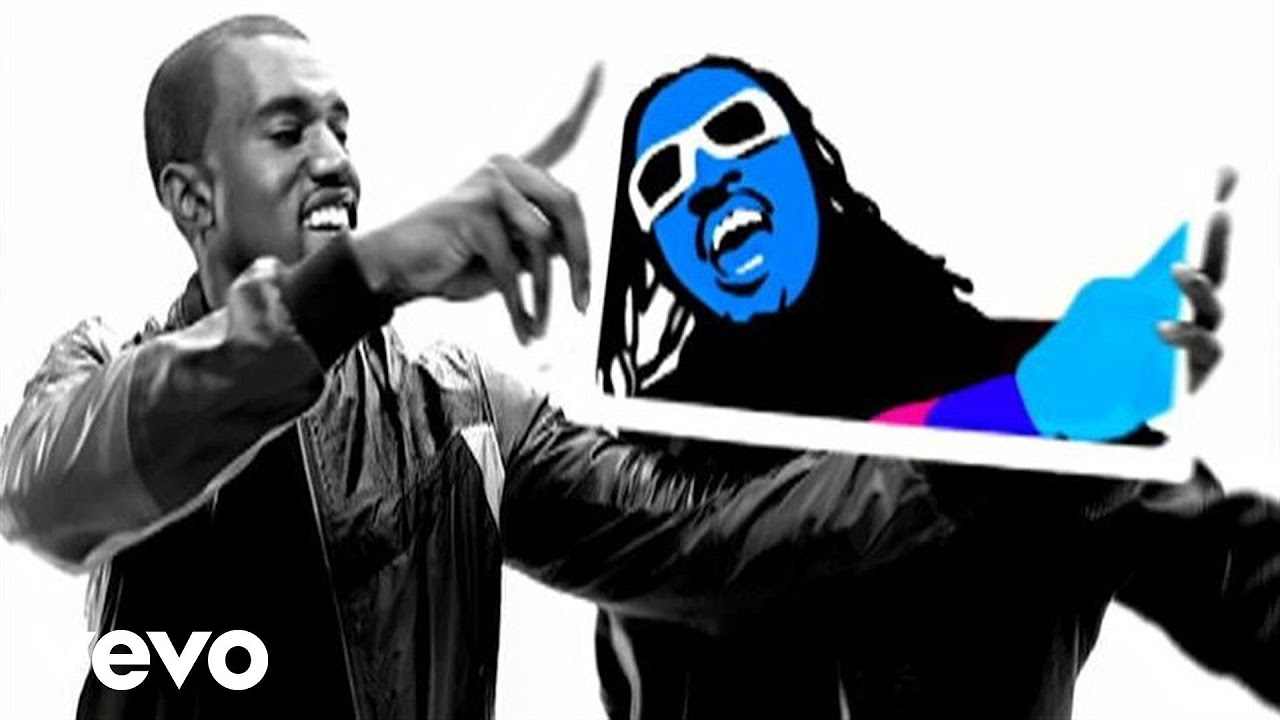
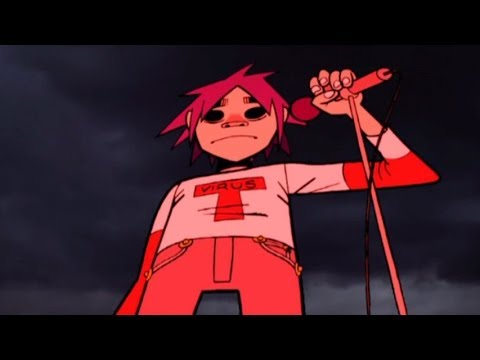
Animated music videos have an animated film, or cartoons, with the soundtrack playing in the background. 
These videos usually don't have anything real to show to the viewers, even though the song is produced by the original artist.
The animations in the videos are designed by using different software and these music videos are usually cheap as they are entirely digital.


Image result for interpretive style music videos
Interpretive.
Interpretive music videos can be interpreted by the audience in many ways. 
Each person can see the video in different ways and understand a different meaning according to their mentality.


Impressionists.
An impressionist music video can be used to show a particular theme to the audience.
It includes random and peculiar shots and images to express the theme of the video.
Abstract features are mostly used in an impressionist music video.Image result for impressionist style music videos
Image result for intertextuality style music videos

Intertextuality.
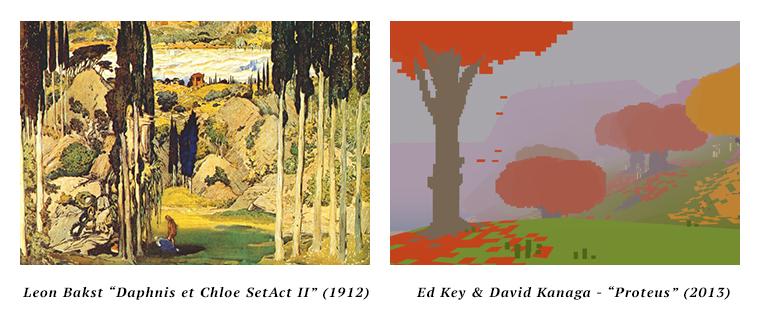
References used from some other media product, some mythology, history, or any other type of music video.


Surrealist.
Simliar to impressionists music videos, surrealist music videos are very abstract and may not have a relation with the music itself.
A surreal music video contains artificial, unreal or superstitious elements in it.
A surreal music video gives a very different dream like effect to the audience.Image result for surrealist style music videos

Allusion.
It is similar to intertextuality to some extent.
An allusion music video gives reference of another thing sometimes directly and sometimes indirectly.
It depends on how the audience see the video, and how they make a connection between the video and others similar to ones they have seen before.
Image result for allusion style music videos


Types of music videos


Types of music videos
Performance based.
Narrative Based.
Concept based.


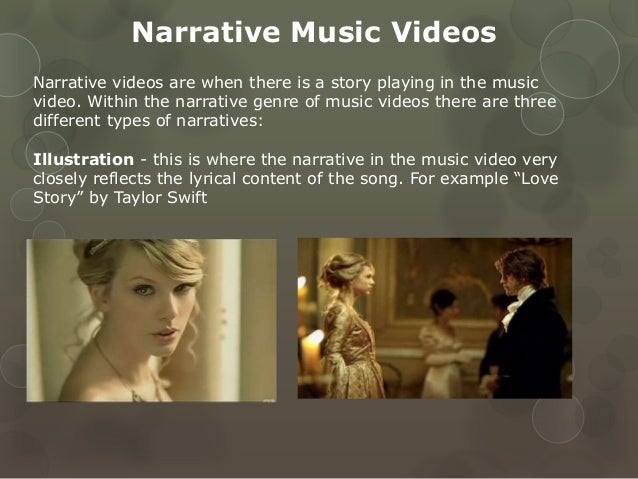
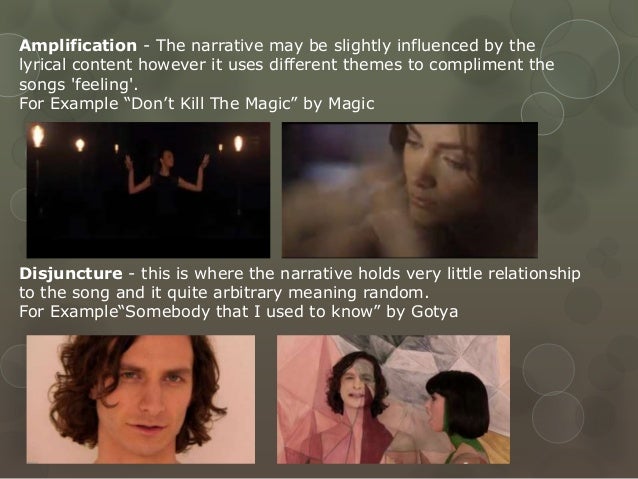
Narrative Based music videos,
Narrative videos try and tell a story which include the lyrics or in the video the lyrics have been dramatised.
Narrative videos are often found when they feature footage of a film.
They also often establish a clear relationship between the lyrics and the visuals of the song.
Either actors are acting according to the story of the music artists are performing. Narrative based music videos might include performance of the actors of the musicians, but they focus mainly on the narrative.
Narrative based music videos require the viewers to understand the lyrics of the song clearly and these types of music videos are easily understood and enjoyed by the audience.
Image result for narrative music videos


Image result for narrative music videos


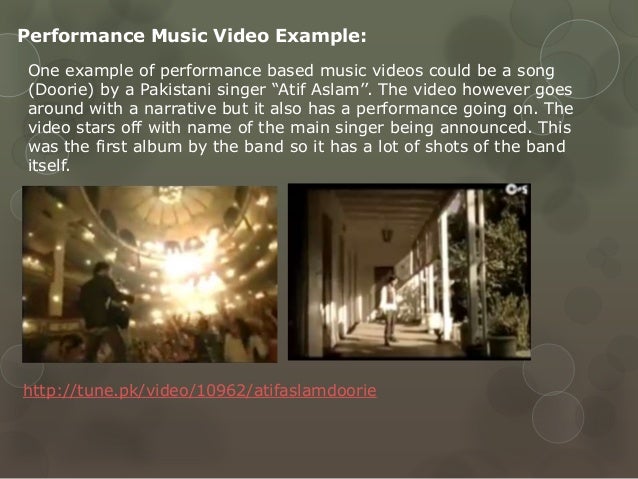
Performance based music videos


Performance based music videos are only, or mainly the artist or band performing their song.
These include dancing, lip syncing, live concerts or musicians playing music instruments.
Performance based music videos mostly build relationships with the audience to show off their star identity.
These videos don't have any specific message for the audience or there is no concept or idea behind the song or video.
There is no connection between the lyrics of the song, as you would be able to see well dressed artists performing on their song.
These types of videos mostly include close up shots or the artist and the artist making direct contact with the viewers.
Performance based music videos are the most common of the three.
Image result for performance music videos
Imagine Dragons
Image result for performance music videos


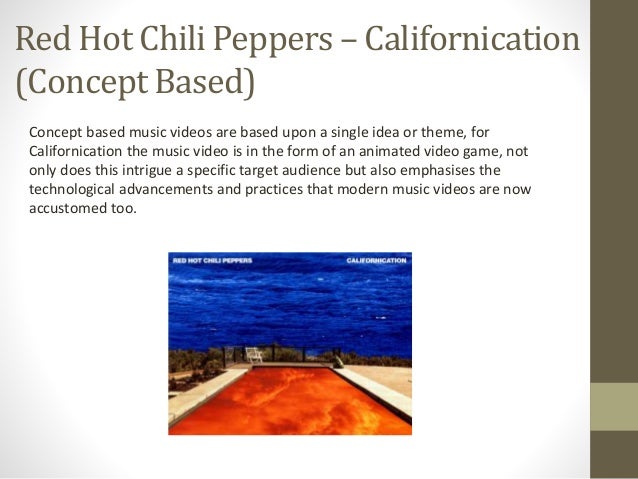
Concept based music videos


Concept based music videos are based on a specific concept or a theme.
The concept can be magic, supernatural, historical, religious, scientific or any other idea which is based on a concept or a theme.
Mostly concept based music videos intrigue a specific class or target audience, according to the idea of the music video.
These videos are not easy to understand as the other two types are and they are more difficult to produce.
Concept based music videos can be very interesting if the content id fully understood by the viewers.
The unusual content of the video is what attracts most of the people.
Image result for concept music videosRelated image